Deciding whether to paint or stain your deck is genuinely a difficult call. Both options protect the wood, both come in a range of colors, and the right choice depends on the type of wood, the condition of the deck, and what you want it to look like.
Here is how the two actually differ, and where we land after a lot of Colorado decks.
What is deck stain?
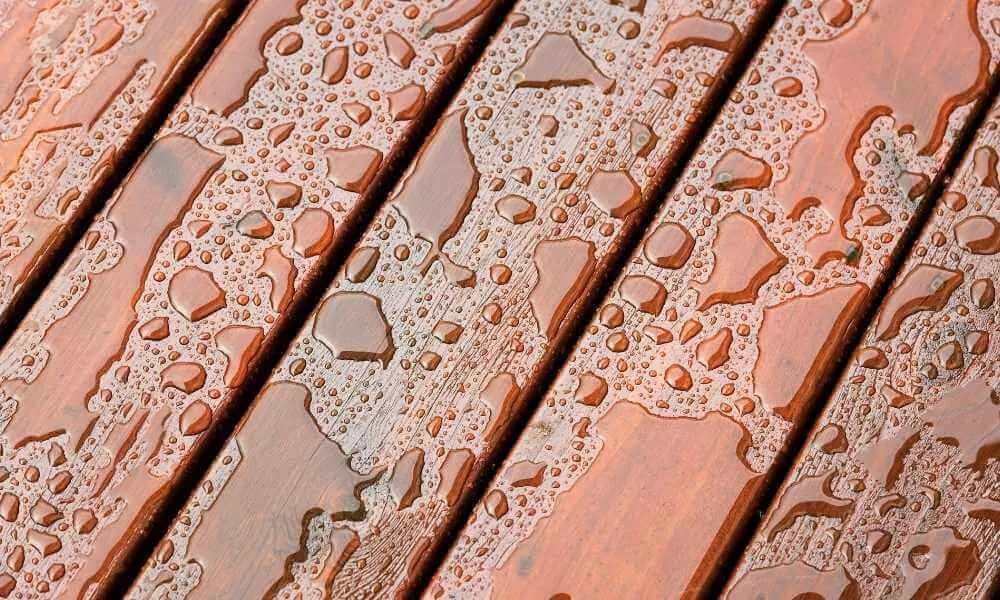
Deck stain is a coating applied to wood decks to protect them from the elements and enhance their appearance. It is designed to penetrate deep into the wood fibers and provide a protective barrier against water, UV rays, and the other environmental factors that cause wood to rot, warp, or fade over time.
Deck stains come in a variety of colors and finishes, including transparent, semi-transparent, and opaque. Some are also formulated with mildewcides and fungicides to help protect the wood against mold and mildew.
Related: Should you stain underneath your deck?
What is deck paint?
Deck paint is also a protective coating, but it works differently. Deck paint is typically much thicker than stain, and it creates a solid film on the surface of the wood rather than soaking into it.
That film provides its own barrier against water and UV. Deck paint is available in a wide range of colors and finishes, from matte to gloss to textured, and some deck paints also contain mildewcides and fungicides.
The difference between decking stain and paint
Penetration
Deck stain penetrates the wood fibers, providing protection while preserving the natural appearance of the wood. Deck paint creates a solid, opaque film on the surface that covers the natural grain and texture entirely.
Durability
This is where it gets counterintuitive. Paint forms a thicker film, so on paper it is the more durable coating, and a well-applied deck paint can go five to ten years before it needs recoating against two to three years for stain.
The catch is what happens when that film gives way. A deck is a horizontal surface that takes foot traffic, furniture, weather, and in a lot of Colorado homes, dogs. Paint chips, scratches, and peels, and once it starts, the repair is not a quick recoat: the failing film has to come off first.
Stain has no film to fail. It fades and wears down gradually and evenly, and recoating is straightforward.
This is why we do not recommend painting decks. A painted deck can start looking unsightly well before its coating is nominally due for replacement.
Maintenance
Stain needs reapplying more often, every two to three years. Paint needs recoating less often on paper, but the maintenance it does need tends to be harder work, because chips and peeling have to be stripped and prepped rather than simply recoated.
Color options
Deck paint comes in a wider variety of colors than deck stain and can achieve a wider range of looks, including solid, opaque colors. Deck stain typically comes in a more limited range, and is generally used to enhance the natural color of the wood rather than replace it.
Application
Deck paint is thicker and more difficult to apply. It requires more preparation, more coats, and more drying time between coats. Deck stain is relatively easy to apply and dries quickly.
Advantages of painting your deck
- A thicker protective film. Paint creates a barrier against rain, sun, and wind that is physically thicker than a penetrating stain.
- Variety of colors. Paint comes in a wide range of colors, so you can match the deck to the rest of your home.
- Easier to wipe clean. Paint creates a smooth surface, so dirt and grime sit on top rather than working into the wood.
Disadvantages of painting your deck
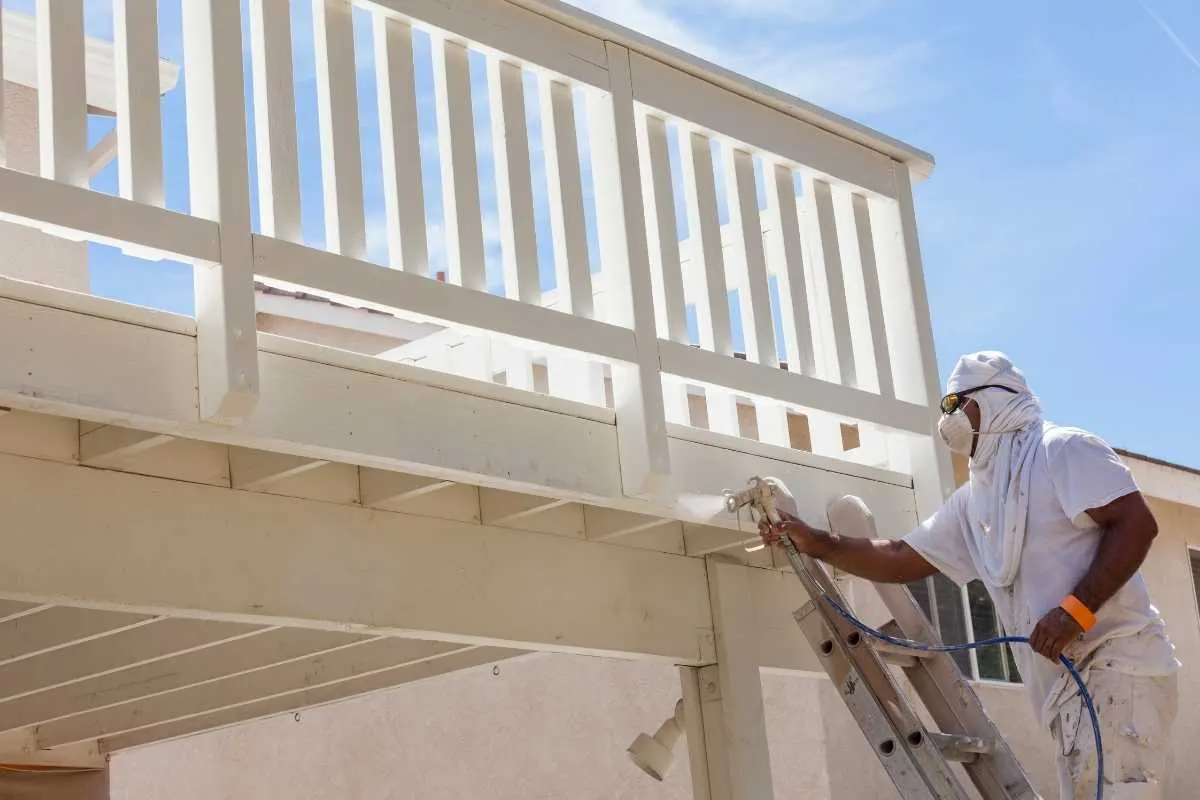
- Reduced natural beauty. The opaque film covers the grain and texture of the wood.
- Can peel or chip. Paint is far more prone to peeling and chipping than stain, especially where the surface was not properly prepared, or where the deck sees heavy foot traffic.
- Risk of cracking. Painted decks are more likely to crack over time, particularly in spots that see big temperature swings or hold moisture, which describes most of Colorado.
- Harder repairs. Because the damage is to a film rather than to the wood, fixing it usually means stripping back to bare wood first.
- More difficult to apply. More prep, more coats, more drying time.
Advantages of staining your deck
- Enhances the natural beauty of the wood. The grain stays visible, which on a good deck is the whole point.
- Wears instead of failing. Stain fades gradually and evenly, so a deck that is due for a recoat still looks like a deck.
- Easy to apply. Staining is straightforward enough that a confident DIYer can take it on.
Disadvantages of staining your deck
- Needs recoating more often. Every two to three years to keep both the appearance and the protection up.
- Limited color options. Stains come in fewer colors than paint, and it can be hard to match an exact shade.
- Limited finish options. Transparent, semi-transparent, and semi-solid, which may not suit every deck or every taste.
Factors to consider when choosing
The type of wood
Some woods, such as cedar and redwood, are naturally resistant to rot and decay and do not strictly need a coating at all. Others, such as pine and spruce, are not resistant and do need protecting.
The condition of the wood
A deck in good condition takes stain well and shows it off. A deck that is already weathered, patched, or previously painted has fewer options, and that is worth an honest look before you buy any product.
Your own preferences
If you want to see the wood, stain. If you want a bold, solid color and you accept the upkeep that comes with it, paint is the only way to get there.
So, should you paint or stain your deck?
For most decks, most of the time, we recommend stain. Paint buys you color range and a nominally longer recoat cycle, and it costs you the grain, the easy maintenance, and a good chance of chips and peeling on a surface that gets walked on every day.
Weigh the wood, the condition, and the look you want, and if you would like a second opinion, talk to us. We stain decks, fences, and exterior wood throughout the Denver metro, and we will tell you honestly if your deck is not a good candidate.
Frequently asked questions
Should you paint or stain a deck?
We recommend staining. Painted decks tend to chip and scratch, especially from the wear a deck surface takes, and especially if you have dogs. Stain soaks into the wood fibers instead of sitting on top, so as it ages it wears down evenly rather than peeling away in patches.
How often does deck stain need to be reapplied?
Plan on every two to three years. Deck paint nominally lasts longer, five to ten years, but that number assumes the film stays intact, and on a horizontal surface that takes foot traffic and Colorado weather it often does not.
Do cedar and redwood decks need to be stained?
Cedar and redwood are naturally resistant to rot and decay, so they do not strictly need a coating. Pine and spruce are not, and they do need to be protected. Even on a naturally resistant wood, stain still adds UV protection and keeps the color from graying out.
What is the actual difference between deck stain and deck paint?
Stain penetrates deep into the wood fibers and leaves the grain and texture visible. Paint is thicker and forms a solid, opaque film on the surface that covers the grain. Both protect against water and UV, but they fail in very different ways.
Ready to see it on your walls?
Get a free estimate and a certified color consultation, with no payment until you are 100% satisfied.
Book My Free Estimate